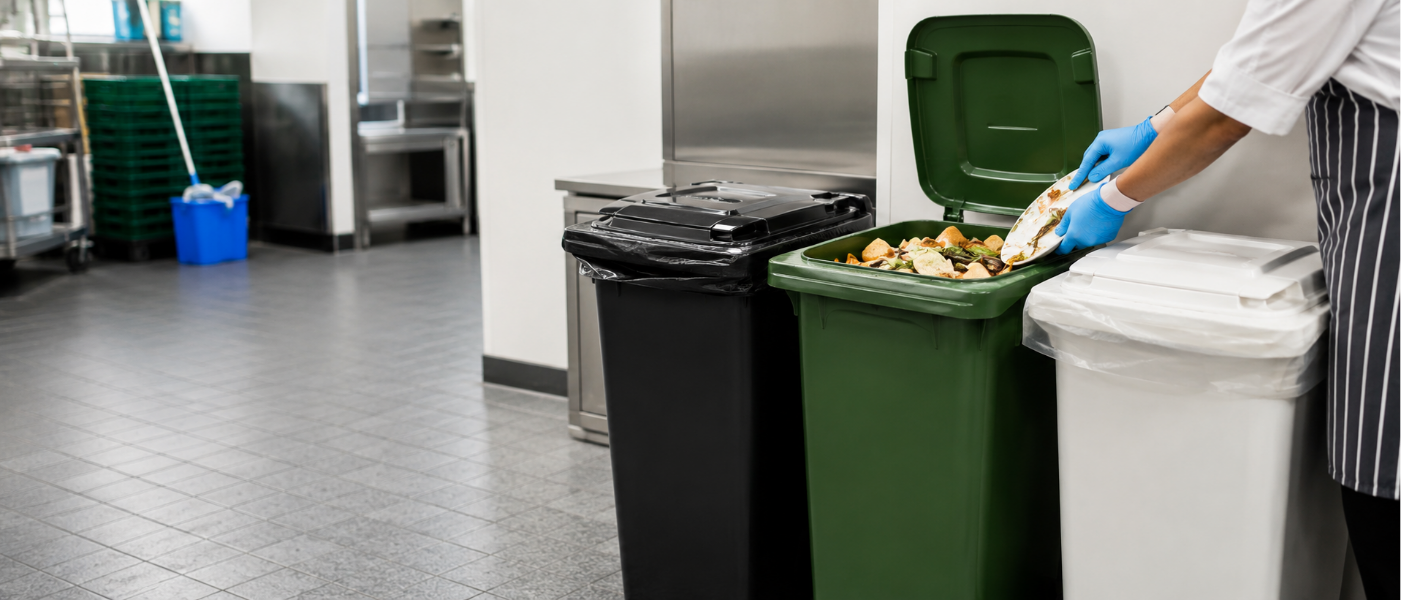
For many businesses that produce food waste, the practical answer is yes. Separate food waste bins are often the simplest way to keep food waste apart from general waste before collection.
Food waste should not be treated as general waste if it can be separated, stored and collected properly. That applies whether it comes from preparation areas, plate scrapings, staff kitchens, expired stock or customer-facing spaces.
The practical point is simple: if your business produces food waste, you need a clear system for keeping it separate before collection.
That is where food waste bins for businesses become useful. They make segregation easier for staff, reduce contamination, support compliance and help collections run more smoothly. At Kane Enviro, we focus on practical waste management that fits the way your site actually operates.
Why Food Waste Needs Its Own Bin
Food waste is different from dry recyclables and general trade waste. It is wet, heavy, organic and more likely to create hygiene or odour issues if it is left in the wrong container for too long.
When food waste is mixed with general waste, it can make other materials harder to recover. Cardboard, packaging and recyclables can quickly become contaminated once food residue, liquids or spoiled stock are added to the same bin.
Separate food waste collections help with:
-
Better hygiene control
-
Cleaner general waste and recycling streams
-
Reduced odour and pest risks
-
Easier collection planning
-
Clearer waste documentation
-
Better visibility of how much food waste your business produces
Current workplace recycling guidance has placed greater emphasis on separating food waste from other waste streams before collection. Requirements can vary depending on where your premises are based and how your business operates, so it is sensible to check the rules that apply to your site.
So, Do Businesses Need Separate Food Waste Bins?
In many cases, yes. If your business generates food waste, you should plan for a separate container or collection method so that food waste is not mixed with general waste.
The exact requirements can depend on the type of organisation, how much food waste is produced and how the premises operate. However, separate storage is usually the simplest way to manage food waste correctly.
A separate bin also gives your staff a clear instruction. Food goes here. General waste goes there. Recycling goes somewhere else. No guesswork, and far fewer problems when collection day comes around.
For more details on the legal side, our guide to commercial food waste legislation explains what businesses should consider when reviewing their waste responsibilities.
What Counts as Business Food Waste?
Food waste can come from more places than many businesses realise. It is not limited to commercial kitchens.
Common examples include:
-
Fruit and vegetable peelings
-
Meat, fish and dairy waste
-
Bread, rice, pasta and cooked food
-
Plate scrapings
-
Out-of-date or spoiled food stock
-
Food left in staff kitchens
-
Coffee grounds and tea bags, where accepted by your collector
-
Food waste from events, canteens or hospitality areas
Food waste can also appear in places that are easy to overlook, such as staff break areas or customer seating areas. A quick site walk-through can help identify where separate bins are actually needed.
Packaged food may need extra handling, especially where food must be separated from packaging before collection.
Food Waste Bin vs General Waste Bin
A separate food waste bin is not just another container. It has a different job.
|
Waste area |
General waste bin |
Food waste bin |
|
Main purpose |
Residual waste |
Food waste for separate collection |
|
Typical contents |
Non-recyclable rubbish and contaminated items |
Food scraps, spoiled food and preparation waste |
|
Main risk |
Poor segregation |
Odour, leakage or contamination |
|
Best use |
Final waste stream after recycling and food waste are removed |
Dedicated stream for food waste only |
|
Operational benefit |
Keeps residual waste contained |
Improves hygiene and waste visibility |
Why Food Waste Bins for Businesses Make Waste Management Easier
Food waste bins for businesses are designed to make separation part of the normal working day. The easier the system is, the more likely your team is to use it properly.
They Reduce Confusion for Staff
Clear bins reduce decision fatigue. Staff do not have to stop and think every time they clear a plate, empty a prep station or dispose of spoiled ingredients.
They Help Keep General Waste Under Control
Food waste can take up more space than expected, especially when it is wet or heavy. Removing it from the general waste can make your residual waste stream cleaner and easier to manage.
If you are reviewing your wider bin setup, our guide to choosing the right trade waste bins may help you think through size, placement and collection needs.
They Support Better Hygiene
Food waste can quickly become unpleasant if it is stored badly. The right bin size, liner arrangement and collection frequency can help reduce odour, leaks and pest attraction.
For food businesses, waste handling is also part of keeping premises safe and clean. The Food Standards Agency advises that food waste should be disposed of securely and properly, including keeping food waste out of sinks and drains, where it can create further problems.
They Improve Waste Reporting
When food waste is collected separately, it becomes easier to understand how much your business is producing. That matters for compliance, sustainability goals and cost control.
You can start asking better questions:
-
Are we over-ordering?
-
Is stock rotation working?
-
Do we need a different collection schedule?
-
Are all teams using the bins correctly?
Waste data is not just paperwork. Used properly, it gives you a clearer picture of what is happening on site. Our waste reporting service can support businesses that need clearer information across their waste streams.
Choosing the Right Food Waste Bin Setup
There is no single food waste bin arrangement that suits every business. A small office kitchen, a food production site and a busy hospitality venue will all produce food waste differently.
Before choosing a food waste collection service, think about:
-
How much food waste do you produce
Too small a bin leads to overflow. Too large a bin can create hygiene issues if waste sits for too long. -
Where the waste is generated
Food prep areas, customer-facing spaces and staff kitchens may all need different internal containers. -
How often are collections needed
Collection frequency should reflect real usage, seasonal demand and storage limits. -
Whether food is packaged
Packaged food may need to be separated before disposal, depending on the collection route and treatment method. -
How staff will use the system
A compliant system still needs to be practical. If it slows people down too much, it will not be followed properly.
What Should Not Go in a Food Waste Bin?
Food waste bins should be kept as clean and uncontaminated as possible. Your collector should confirm exactly what is accepted, but non-food materials should generally be kept out.
Items that usually need to be excluded include:
-
Plastic packaging
-
Cutlery and stirrers
-
Glass
-
Metal tins or cans
-
Disposable cups
-
Cleaning cloths
-
Chemicals
-
General rubbish
-
Cardboard and paper packaging
-
Liquids, unless your collection service allows them
Businesses also have a duty to manage waste safely and pass it only to authorised waste carriers. The official waste duty of care code of practice is a useful reference point for understanding those responsibilities.
How to Set Up Food Waste Bins Properly
A good food waste system should be simple, visible and realistic.
-
Review where food waste is produced
Walk through the site and identify the main waste points, such as kitchens, prep benches, dining areas, staff rooms and storage areas. -
Match bin sizes to real waste volumes
Avoid guessing where possible. If you already have waste collection data, use it. If not, start with a sensible setup and review it after a few collections. -
Place bins where people need them
A food waste bin should be close enough to use properly. If staff have to cross the site every time they scrape a plate, the system will quickly lose discipline. -
Use clear signage
Simple signs work best. Show what goes in and what stays out. -
Review collection frequency
Food waste should not be allowed to build up. The right schedule helps prevent odours, overflowing containers and disruption.
Keeping Food Waste Collections Practical
Setting up separate food waste bins is one thing. Keeping the system compliant, clean and reliable is where the right collection process makes the difference.
For businesses producing food waste regularly, a managed food waste collection service can help with suitable containers, collection schedules, licensed disposal routes and environmental documentation.
Rather than leaving you to guess what size bin or collection frequency is needed, we look at how your waste is produced. That means considering bin placement, volume, collection frequency, packaged food issues and the paperwork you need to keep on file.
If your current setup still relies on food waste going into general waste, or if your bins are overflowing between collections, it may be time to review the process. A food waste collection plan can help you build a cleaner, better-controlled waste process.
Food Waste Bins Are Now Part of Good Business Waste Management
Separate food waste bins are no longer something only large kitchens need to think about. They are part of stricter waste separation expectations and clearer responsibility for how waste is handled.
For businesses, the best approach is to keep things simple: separate food waste where it is produced, use the right containers, arrange reliable collections and keep the correct documentation.
A properly planned food waste collection setup can reduce confusion, support compliance, and make day-to-day waste handling easier to control.
At Kane Enviro, we can help you put a practical food waste collection setup in place, shaped around how your business actually works. If you need support reviewing your current setup, you can speak to our team, and we will help you find the right route forward.