

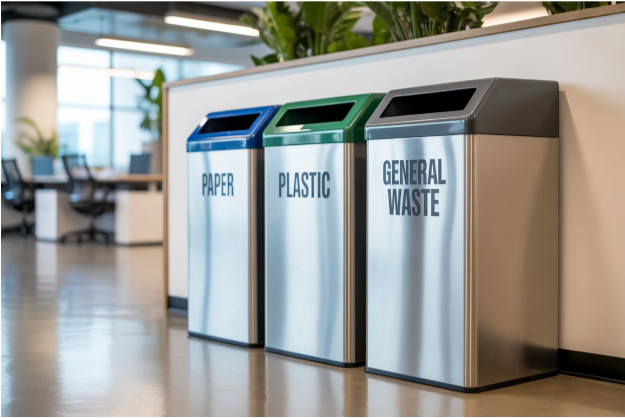
Waste segregation is the practice of separating different types of waste at the point of production so each stream can be managed, recycled or disposed of correctly. For UK organisations, it is a key part of staying compliant, controlling costs and keeping sites safe and professional.
This guide explains what waste segregation actually involves, why it matters, and how to set up a simple, workable system across your site.
What does waste segregation mean in practice
Alternative text: Overhead view of plastics, paper, food scraps and cans sorted into bins to show how waste segregation is carried out.
Waste segregation means placing waste into separate, clearly labelled containers as soon as it is created. Instead of putting everything in one bin, materials are kept apart so they can follow the right treatment route.
Most organisations separate waste by:
-
Material type, such as paper and cardboard, plastics, metals, glass or food
-
Risk, such as hazardous chemicals or clinical waste
-
Treatment route, such as recycling, composting, recovery or landfill
The UK Government’s waste duty of care code of practice sets out how businesses must store, handle and transfer waste safely. It highlights the importance of keeping waste in suitable containers and preventing pollution or harm, which is far easier when streams are segregated from the start.
Segregation, sorting and mixing
Three ideas are worth keeping clear:
-
Segregation - keeping different wastes separate at the point of production
-
Sorting - separating mixed waste later at a facility
-
Mixing - combining wastes that should stay separate
Good segregation reduces the amount of sorting needed and avoids the problems that come from mixing incompatible or contaminating materials.
Why waste segregation matters for organisations
Segregation is not just a box to tick for the environment. It has clear benefits for compliance, recycling performance, budgets and day-to-day operations.
Helping you meet legal duties
Businesses in the UK must classify, label and manage waste correctly. When streams are clearly separated, it becomes much easier to:
-
Complete transfer notes and consignment notes accurately
-
Store hazardous or sensitive materials in the right way
-
Show regulators that waste is being handled responsibly
Many organisations operate across very different environments, from factories to schools and leisure venues. Kane Enviro’s sector-specific waste solutions reflect how segregation plans need to be tailored to each setting while still meeting the same core duty of care.
Improving recycling quality and reducing contamination
Recycling depends on clean, well-separated materials. When food, liquids or general waste end up in the recycling containers, contamination rises and entire loads may need to be rejected.
WRAP’s guidance on tackling contamination in dry recycling explains how mixed loads increase costs and reduce recycling rates for local authorities and businesses. Clean, segregated materials move more efficiently through the system and retain higher value.
At a broader scale, the European Environment Agency’s briefing on recycling quality notes that separate collection is one of the strongest predictors of high-quality recycling across Europe. Improving segregation on site is one of the most direct ways UK organisations can support this.
Controlling costs and keeping sites professional
Using a single bin for everything can feel simpler, but mixed waste is usually more expensive to collect and harder to treat. A well-planned segregation system can:
-
Reduce the volume of general waste going to disposal
-
Lower contamination fees on recycling streams
-
Unlock better rates for clean, single-stream recyclables
For sites with regular collections, predictable trade waste services help match collection schedules and container types to the actual waste produced, which supports both cost control and day-to-day site management.
Segregation also helps maintain a cleaner, safer site. Clear bin stations reduce ad hoc waste piles, make it easier to keep walkways tidy and leave a more professional impression on staff, visitors and clients.
Common waste streams and how to separate them
Every site generates waste differently, but most UK organisations work with a similar set of core streams.
Typical business waste streams
|
Waste stream |
Examples |
Common container type |
Treatment route |
|
General waste |
Non-recyclable packaging, contaminated items |
Black or grey bins |
Energy recovery or landfill |
|
Mixed recycling |
Clean paper, card, cans, bottles, plastics |
Blue or green bins |
Sorting and recycling |
|
Glass |
Bottles and jars |
Glass-only containers |
Glass recycling facility |
|
Food waste |
Prep waste, plate scrapings, expired items |
Sealed caddies or dedicated bins |
Anaerobic digestion or composting |
|
Hazardous waste |
Oils, paints, solvents, adhesives, batteries |
Approved, clearly labelled containers |
Specialist hazardous treatment |
|
Clinical waste |
Sharps, dressings, infectious materials |
Colour-coded clinical containers |
High temperature treatment or incineration |
|
Construction waste |
Timber, rubble, soils, metal offcuts |
Skips or segregated bays |
Recycling or recovery |
Container colours and exact arrangements vary by contractor, so each site should confirm details as part of its duty of care checks.
How to set up a practical waste segregation system
A good segregation system is straightforward, realistic and built around how your site actually operates. The steps below provide a simple framework.
Step 1: Carry out a waste audit
A waste audit gives you a clear picture of what you are dealing with. As you walk the site, note:
-
Where waste is generated
-
The main materials in each area
-
How full bins are on collection days
-
Any locations where contamination or overflows are common
Involving both operational teams and cleaning staff often reveals patterns that are not obvious from paperwork alone.
Step 2: Choose the key streams to separate
Not every site needs every possible stream. Focus first on:
-
High-volume materials that are easy to recycle
-
Food waste where catering is significant
-
Any hazardous or sensitive materials that need strict control
-
Streams that drive higher disposal costs
Many organisations start with separate general waste, mixed recycling and food waste. Once these are working well, it becomes easier to introduce extra containers where there is a clear benefit.
Step 3: Plan bin locations and signage
Bin placement has a major impact on how well segregation works. People usually choose the nearest bin, especially in busy environments.
A practical layout will:
-
Place bin stations where waste is actually produced
-
Keep recycling bins as easy to reach as general waste bins
-
Use consistent colours across the site
-
Rely on clear, visual signage rather than long written instructions
Small changes, such as moving bins closer to work areas or grouping containers, can make a noticeable difference to compliance.
Alternative text: Outdoor recycling and waste bins with clear labels showing how businesses separate materials for effective waste segregation.
Step 4: Train people and keep an eye on performance
Even the best layout will only work if people understand it and see that it matters.
Training and follow-up should:
-
Explain why segregation is important for compliance, recycling and safety
-
Show clearly what belongs in each container
-
Highlight any particular risks around hazardous or clinical wastes
-
Encourage staff to report problems with bin locations or overflows
Regular spot checks and simple reviews of collection data help you see where things are working and where adjustments are needed. Kane Enviro’s waste and sustainability reporting tools make it easier to track trends over time and demonstrate improvements across a single site or a wider portfolio.
Hazardous waste: when specialist support is essential
Many organisations produce small or occasional quantities of hazardous waste, such as solvents, aerosols, paints or chemical residues. These materials must never be mixed with general waste and are subject to strict UK regulations.
Segregating hazardous items into suitable, clearly labelled containers is essential for safety and compliance. Correct storage, documentation and treatment also require specialist knowledge.
Kane Enviro provides compliant hazardous waste management services to help businesses store, segregate and dispose of dangerous materials safely.
If your site handles hazardous substances and you would like independent guidance on safe segregation and regulatory compliance, you can visit our hazardous waste service page to speak with a specialist and discuss suitable options for your organisation.
The key takeaway
Waste segregation is about giving structure to something every organisation already does: producing waste. By separating materials at the point of generation, UK businesses can:
-
Strengthen compliance with waste regulations
-
Improve recycling quality and reduce contamination
-
Control disposal costs more effectively
-
Maintain cleaner, safer and more professional environments
With a clear plan, sensible bin layouts, regular staff engagement and the right external support, segregation becomes second nature and forms a solid foundation for responsible environmental management.