

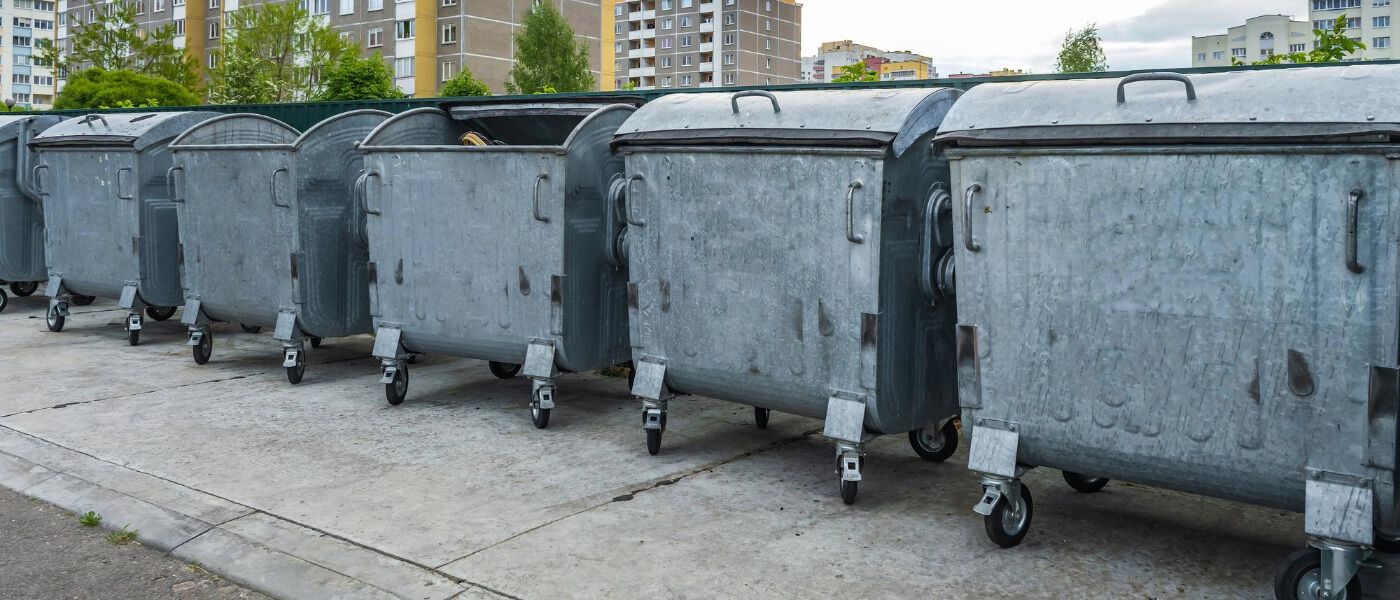
Commercial waste duty of care is one of those obligations that feels paperwork-heavy until the day you need to evidence it. Then it becomes very simple: can we show we stored waste safely, described it properly, and only passed it to authorised people with the right paperwork?
We’ll cover what duty of care looks like in day-to-day operations, which records matter most, and where businesses usually get caught out. The aim is not to create more admin. It is to make sure the admin you already have actually protects you.
What duty of care is really about
Duty of care is a legal responsibility to manage controlled waste properly from the moment it is produced to the point it is collected and dealt with through an authorised route.
In practice, we usually check four areas:
-
Waste is stored securely so it cannot escape, leak, blow away, or be interfered with
-
Waste is described accurately so it can be handled and processed safely
-
Waste is only transferred to authorised people and taken to appropriate facilities
-
Records are kept and can be produced quickly when asked
At Kane Enviro, we see duty of care work best when it is treated as a routine, not a one-off. If the process is simple enough to follow, it tends to stay consistent when things get busy.
We’re often asked to help tighten up waste descriptions, improve segregation at the point of disposal, and make record retrieval straightforward when contractors or waste streams change.
Who the duty applies to, and when it bites
Duty of care applies to anyone who produces, keeps, stores, transports, treats, or disposes of controlled waste as part of business activity. In most organisations, that includes far more people than the “waste person”.
It usually bites when:
-
a waste stream changes (new packaging, new process, new contractor)
-
collections increase, and storage gets pressured
-
someone needs evidence quickly (audit, landlord request, incident review)
-
waste ends up in the wrong container and causes a rejection or contamination issue
The simplest way to stay compliant is to assume the duty of care sits across the operation, not only with the person who arranges collection.
What the law and guidance expect you to do
The legal duty sits in Section 34 of the Environmental Protection Act 1990, which requires anyone who produces, carries, keeps, treats or disposes of controlled waste to take reasonable steps to prevent breaches.
Government guidance expands on what “reasonable steps” look like in practice, including how to store, describe, and transfer waste appropriately. This is set out in the Waste Duty of Care: Code of Practice.
We treat “reasonable steps” as two things: doing the right controls, and being able to show we did them.
How to comply day-to-day without making it complicated
Store waste securely and prevent escape
Secure storage usually means:
-
Containers suited to the waste type and not overfilled
-
Lids shut, skips covered, and waste kept contained
-
Storage areas kept tidy to reduce windblown waste, pests, and cross-contamination
-
Clear separation between waste streams so the wrong items do not end up in the wrong container
We also think about access. If anyone can tip anything into any bin, segregation will fail. A simple storage layout, with clearly defined containers and enough capacity, prevents most problems before they start.
If waste can escape, duty of care has already failed, regardless of how good your paperwork is.
Describe your waste accurately
Waste descriptions should help the next person in the chain handle it properly. Weak descriptions create risk for everyone, including your business, because it makes the route harder to verify.
A practical description should make clear:
-
What the waste is and how it is produced
-
Whether it is mixed or segregated
-
How it is packaged or contained
-
Any handling considerations that apply
When you use formal coding systems (such as EWC codes), keep them aligned with what is actually produced.
A good internal habit is to review descriptions whenever something operational changes. New supplier. New product line. New packaging. Those changes often shift the waste stream.
Transfer waste only to authorised parties
Duty of care does not end at collection. We should take reasonable steps to check that the collector is authorised and the route is appropriate for the waste type.
Authorised typically means the collector and the route are appropriately licensed or permitted for the waste type, and we can conduct evidence checks.
At a minimum, we should be able to evidence:
-
Who collected it
-
That they were authorised to do so
-
What was collected and where it was sent
This is where “we’ve used them for years” is not the same as “we do evidence checks”. People change, businesses change, and routes change. Duty of care is about keeping checks up to date.
Paperwork you need and how long to keep it
For most non-hazardous commercial waste, the key document is a Waste Transfer Note. Government guidance explains what must be included and that copies must be kept for at least two years. See waste transfer notes and how long to keep them.
Records are only useful if they can be retrieved quickly, not recreated later.
For routine collections of the same waste, a season ticket arrangement can be used, provided the details remain accurate. Season tickets are helpful, but they do not remove the need to keep things aligned. If the waste changes, the paperwork needs to change too.
Quick reference table
|
Waste scenario |
Typical document |
What it proves |
Keep for |
|
General commercial waste and recycling |
Waste Transfer Note |
Waste description and transfer chain |
2 years |
|
Regular collections of the same waste |
Season ticket transfer note |
Ongoing collections under the same terms |
2 years (from end date) |
|
Hazardous waste movements |
Hazardous waste consignment note |
Correct classification and compliant movement |
Typically 3 years (confirm your obligations) |
If you handle hazardous waste alongside general waste, it helps to keep those paperwork expectations crystal clear. Our guide to the hazardous waste consignment note covers the essentials.
A simple routine that keeps duty of care under control
This is the routine we recommend because it is easy to repeat and easy to evidence:
-
List your waste streams and update them when operations change
-
Set up storage that prevents escape and cross-contamination
-
Keep waste descriptions aligned with what is actually produced
-
Check carriers and routes when contractors change
-
Complete transfer paperwork consistently
-
Store records so they can be retrieved fast
A small addition that helps is assigning ownership. Not “one person does everything”, but clear responsibility for: storage standards, paperwork completion, and record filing. When ownership is vague, problems drift.
This also ties directly into better waste outcomes. If we reduce and separate waste properly, we usually reduce compliance friction, too. We cover the logic behind prioritising reduction and segregation in our article on the waste management hierarchy.
What to check when you change a contractor or add a new stream
Most duty of care issues appear during change. A simple onboarding checklist keeps it controlled:
-
Confirm which waste streams are included and which are excluded
-
Confirm container types, sizes, and collection frequency
-
Confirm what happens if waste is contaminated or rejected
-
Confirm paperwork responsibility and how it will be supplied
-
Confirm how records will be stored and who can retrieve them
This is also the moment to fix bad habits. If you have “miscellaneous” containers that become a magnet for everything, they will undermine your whole system.
Common duty of care failures and what fixes them
The paperwork exists, but it does not match the waste
This creates problems across the chain. It can also lead to collections being refused, delayed, or reclassified.
Fix: review descriptions whenever processes, packaging, or waste streams change.
Waste is stored “temporarily” in a way that allows escape
Open skips, torn bags, liquids in the wrong containers, and mixed wastes all show up here.
Fix: make storage a system, not an afterthought. Containers and routines beat reminders.
We cannot show we checked the collector
The duty is about reasonable steps, not blind trust. If checks are informal, they are easy to lose when staff change.
Fix: keep a simple record of checks and update it when contractors change.
Records exist, but nobody can find them
This is more common than people admit. The paperwork is “somewhere”, which is not the same as retrievable.
Fix: keep a single folder structure, name files consistently, and store season tickets and WTNs together by contractor and year.
A workable way to keep duty of care under control
Duty of care becomes much easier to maintain when collections are consistent, and documentation is handled properly every time, especially with multiple streams or changing contractors.
If you want a straightforward way to tighten day-to-day compliance, our trade waste service is a practical starting point. It helps keep collections organised and makes it easier to keep the paperwork trail in order.
The key takeaway is…
Commercial waste duty of care is about controlled handling and a clear evidence trail. Store waste securely, describe it accurately, transfer it only to authorised parties, and keep records that are easy to retrieve. If we can produce our Waste Transfer Notes quickly and show our process is consistent, we are in a far stronger position than a business that “usually does the right thing”.
For questions about your current set-up, you can reach us via the contact page.